I Got Tired of Applying to Jobs. So I Decided to Automate the Job.
I’ve applied to roles as an international student, as a part-timer trying to cover rent, and as a full-time Senior SDE. Across every single one, the experience is identical: tech hiring is fundamentally broken.
You can be completely qualified for the stack, capable of clearing whatever LeetCode puzzle or distributed systems round they throw at you, and still get filtered out before a human ever looks at your name. Before starting this project, I was spending two to three days on individual applications. I’d sit there manually cross-referencing job specs, rewriting bullet points, and trying to sound like a normal human being, only to get met with dead silence. Not a rejection email. Just nothing.
Applying for engineering jobs has become an unpaid full-time job.
Naturally, people turned to ChatGPT. Resume tailoring was probably the first thing anyone tried the day LLMs went public.
And it made everything worse.
The moment you paste a 5-page history and a 2-page job spec into a chat window, the model turns your actual career into corporate slop. A paper out of UMD and DeepMind (StoryScope: Investigating Idiosyncrasies in AI Fiction) analyzed thousands of stories to figure out how AI gives itself away. The biggest tells aren’t obvious buzzwords. They are structural: AI over-explains things, it forces artificially tidy narratives, and it sands off all the friction.
When you use raw ChatGPT on your resume, that’s what happens. It takes messy, hard-fought production debugging and turns it into a fairy tale about “cross-functional paradigm shifts.” It strips out the actual technical trade-offs that make an engineer sound competent.
The alternative is staring at an empty Google Doc and rewriting your CV by hand for the fiftieth time, which is just as bad. The HD in ADHD might stand for High Definition, but staring at a blank screen is just pure static. When there’s no signal on the page to push against, my executive function completely flatlines. I don’t need a blank canvas—I need an aggressive sparring partner to challenge a metric, poke holes in an architecture, or draft a raw first pass so I can tear it apart.
So I stopped using ChatGPT in a browser window, and I stopped writing by hand.
I started writing a local-first Python CLI that forces the model into a box. It only reads from a verified file of things I actually built. If a skill isn’t in that file, the engine refuses to generate it. No hallucinations, no generic corporate filler. Just my real numbers mapped to their requirements, baked into a clean single-column PDF.
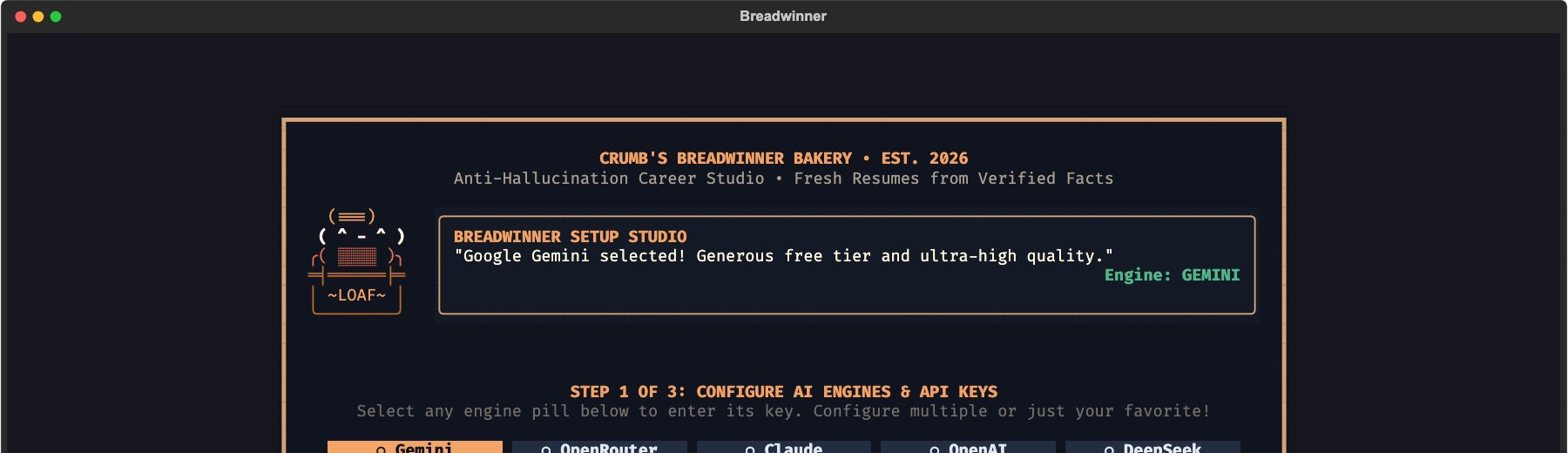
If an aggressive sparring partner can extract verifiable technical proofs from my own chaotic career history, it can do it for anyone drowning in portal tabs.
I got tired of playing a broken game by hand. So I started building an engine.
(Next up: why a resume was never creative writing, but a mathematical proof).